Have you ever gone on a bush walk or even just a stroll in your local park, botanical garden or nature reserve?
Or, simply spent some time gazing at a glorious sunset or scenic view?
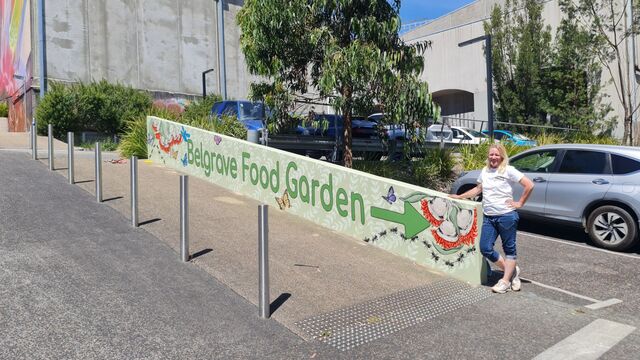
Or even just spending some time tending to your own garden?
Maybe you’ve realized that your interaction with some aspect of nature has left you feeling more relaxed, energized and ready to face the world.
As American poet, Katherine Riegel, writes in this excerpt from her poem, What I Would Like to Grow in my Garden, having a garden, however small or big can be a therapeutic and joyful experience.
Lavender for the bees and because I hate
all fake lavender smells. Tomatoes to cut
and place on toasted bread for BLTs, with or without
the b and the l. I’d like, too, to plant
the sweet alyssum that smells like honey and peace,
and for it to bloom even when it’s hot,
Many of us are feeling overwhelmed when confronted every day with stories and images of violence, death and misery.
We hear of women murdered and abused; of gangs, who appear to be still children, rampaging and committing robberies and assaults.
And yesterday as I sat down to write this article, news started coming through of the horrific knife attack in Sydney’s Bondi Junction Westfield Plaza.
The coverage went on for hours as we heard accounts of the deaths and injuries and the efforts of some brave people ministering to the injured, among them an eight months old baby and her mother.
The cameras were capturing a sense of disbelief that this was happening in downtown Sydney and not somewhere else like LA.
Australia seems to have avoided, up till now, the deep social and political divisions seen elsewhere around the world and evidence suggests our neighbourhood and community connections remain high.
But the events that unfolded on Saturday will undoubtedly test that belief.
All this against a background of everyday problems: from cost of living, mortgage stress to the spectre of possible homelessness.
Young people increasingly angry that they are bearing the brunt of problems not of their making: facing chronic insecurities in housing and often carrying crippling debts incurred from tertiary education.
Older people are concerned about coping as they get older and frailer.
No wonder many are presenting at their GPs with symptoms of stress and depression.
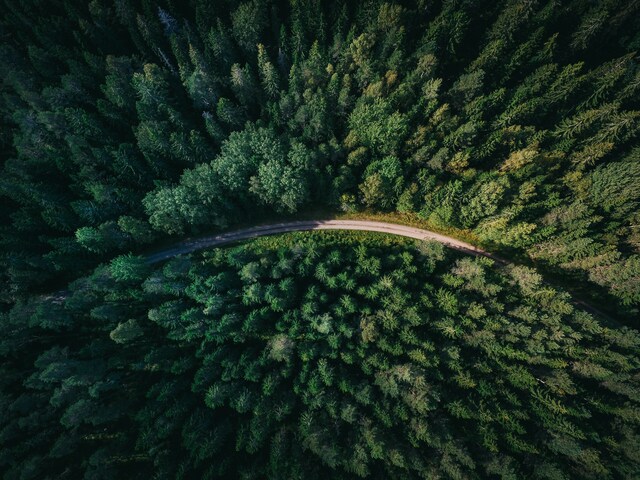
But there are increasingly those who are turning to nature for renewal and relief.
As Rachel Carlson, author of Silent Spring, a book published in 1962 that inspired the modern environmental movement said: There is something infinitely healing in the repeated refrains of nature–the assurance that dawn comes after night, and spring after winter.
For some this renewal can be the found in what is called Forest Therapy or Forest Bathing as it is also known as.
Originating in Japan in the 1980s as Shinrin Yoku it is a therapeutic practice of immersing the senses in nature, often with the help of a guide.
Increasingly, it is being recognized in Australia as a program that connects people with nature and not only improves their sense of wellbeing but has also many health benefits: reducing blood pressure and stress to improving immunity and helping with depression.
Of course this is not to be a green light for people with serious health problems to abandon medical advice or prescribed medications.
Currently Park Victoria runs a Forest Therapy program called Bush Connections for those with disabilities in the Gresswell Forest in suburban Bundoora.
Not only do the participants gain a great deal but they are also involved in maintaining the forest.
There is no reason why such programs can’t be extended to schools, corporates, nursing homes and eco tourism.
The desire to commune with nature is, of course, nothing new and much poetry offers insights into the connection between humanity and nature.
From the Romantics like Wordsworth to Thoreau, Dickinson and Robert Frost to our own Patterson, Lawson, Mackellar and most notably Judith Wright.
Judith Wright’s nature poetry is rich with explorations of the natural world and its significance to human experience.
In her poem Sanctuary written in the early fifties she explores the idea of nature as a sanctuary, a place of refuge and renewal.
In Sanctuary she asks do we know where we are going by destroying our own habitat, native forests, plants and animals?
We see this destruction in the new housing developments built predominantly on the sole calculation of maximum profit rather than consideration for the benefit of not only the displaced habitat for native fauna, but also for the wellbeing of the people living in these new estates. Where are the green spaces for children to play?
Today the poem resonates with its message of nature’s potential to provide solace in times of turmoil.
I hope that all those affected by the event on Saturday will be able to find some peace and comfort in nature.
Sanctuary
The road beneath the giant original trees
sweeps on and cannot wait. Varnished by dew,
its darkness mimics mirrors and is bright
behind the panic eyes the driver sees
caught in headlights. Behind the wheels the night
takes over: only the road ahead is true.
It knows where it is going; we go too.
Sanctuary, the sign said Sanctuary –
trees, not houses; flat skins pinned to the road
of possum and native cat; and here the old tree stood
for how many thousand years? that old gnome-tree
some axe-new boy cut down. Sanctuary, it said:
but only the road has meaning here. It leads
into the world’s cities like a long fuse laid.
Fuse, nerve strand of a net, tense
bearer of messages, snap-tight violin-string,
dangerous knife-edge laid across the dark,
what has that sign to do with you? The immense
tower of antique forest and cliff, the rock
where years accumulate like leaves, the tree
where transient birds and mindless insect sing?
The word the board holds up is Sanctuary
and the road knows that the notice-boards make sense,
but has not time to pray. Only, up there,
morning sets doves upon the power line.
Swung on that fatal voltage like a sign
and meaning love, perhaps they are a prayer.