
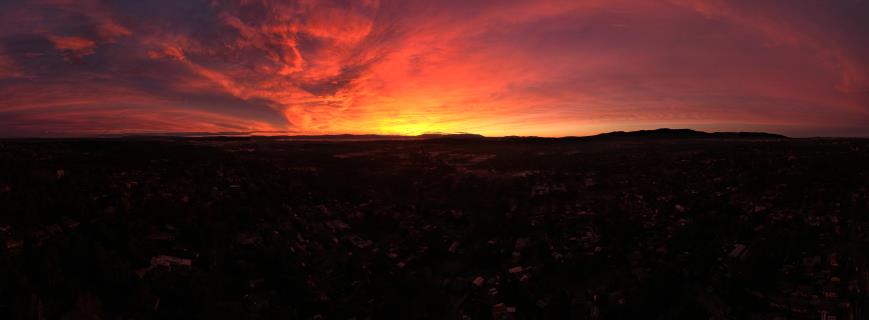
As the south pole reaches its maximum tilt away from the sun, cold weather and less daylight mark winter solstice celebrations each year.
The shortest day and longest night of the year in the southern hemisphere fell on Thursday 22 June in 2023, with the sun rising at around 5am and setting at around 7pm.
The earliest sunset of the year already occurred on Sunday 11 June, with the latest sunrise set to occur on Friday 7 July; officially marking the day the earth is furthest from the sun in its annual orbit – a point called aphelion.
Mount Burnett Observatory committee member Jacquie Milner said the southern hemisphere will start coming back into the sun after aphelion.
“It’s like you’re watching the sun move along the horizon, it’s that day where the the sun more or less turns around and starts moving in the other direction,” she said.
Ms Milner said the winter solstice has had “long cultural significance” throughout history.
“Historically, people needed to know when the seasons were changing so they could plan when to put their crops in.
“There are many recorded instances where societies would be watching for particular stars or star groups…that’s why the Pleiades are so important across Europe; they would be watching them to know when to sow crops.
“The Egyptians would be looking for Sirius in the morning sky to know when the Nile was going to flood, and the Indigenous people in Australia also looked at certain stars to know when it was the right time to hunt things like fish or when certain animals were breeding and to leave them alone and when it was okay to go and hunt them.”
The latest sunrise is set to occur on Thursday 29 June, with Venus and Mars setting in the west and Mercury, Venus, Mars, Jupiter and Saturn visible from the east of the country in July.
Perihelion – the point at which the southern hemisphere will be closest to the sun – is expected to occur in early January, marking the opposite end of the earth’s orbit.