FERNTREE GULLY STAR MAIL
Home » News » What will happen when we stop feeding the birds?

What will happen when we stop feeding the birds?

Everyone loves free food, especially birds, but what happens when the food stops?

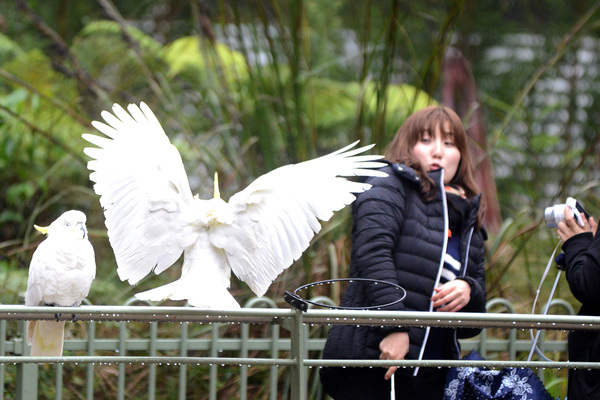
In March 2019, the Sulphur Crested Cockatoos that call Grants Picnic Ground home were dealt a checkmate by Parks Victoria when they confirmed that the feeding of birds would be banned from February 2020.

Furthermore, anyone caught feeding them will risk a hefty fine of up to $1610.

That means, no bread, no french fries, no birdseed, nothing. Otherwise, we run the risk of creating a generation of bird bludgers dependent on handouts – and we don’t want that.

According to Emeritus Professor in Animal Behaviour Gisela Kaplan, a reduction in feeding may also result in adverse effects for residents and the birds.

“If it has to be stopped, it has to be done with some degree of knowledge,” she told the Mail.

“To suddenly stop it is a very cruel idea … some birds would have been there for years and may have stopped understanding of how to feed.”

“You can desensitise them and give them less and less, little spots further away, but to stop it one day to another is like throwing a 13-year-old child on the street.”

Earlier this year, Parks Victorian confirmed that feeding at Grants Picnic Ground was set to be discontinued “following conservation best practice, National Park guidelines and community feedback.”

Though, Parks Victoria have not provided comment on whether the ban will be implemented incrementally or abruptly.

“Bird feeding has had impacts on the natural composition of the bird community and other natural values at the site,” a previous statement said.

“This, coupled with the potential risks posed to bird health as well as visitor safety has led to the decision not to permit wild bird feeding under a new lease.”

A Parks Vic media release in March stated that an independent wildlife consultant conducted a study on the site, with the report showing that no adverse impacts would be expected from the removal of artificial feeding and that “birds readily switch to other sources of food if an artificial supply ceases”.

According to Ms Kaplan those ‘adverse effects’ are dependent upon a variety of factors.

“There’s a further problem with regular feeding, which is really devastating. Those birds unlike humans actually plan a number of offspring in accordance with the food is available,” she said.

“If one feeds half the amount and then there’s nothing there, they then don’t reproduce.”

She told the Mail an incremental decrease in food would take at least 2-3 months.

“If you do it incrementally it should be done an 2-3 month period and done at a time when other food sources are readily available … you wouldn’t do it in the middle of winter or in a drought.”

Professor Gisela Kaplan is an Emeritus Professor in Animal Behaviour in the School of Science and Technology and will be releasing a new Book Bird Bonds in September
 

Digital Editions


More News

  • Top four and a draw

    Top four and a draw

    In the midweek Pennant, Side One played away against Boronia. After an even start, Boronia proved too strong on the day, with Yarra Glen going down 43 to 67 (14…

  • Phoenix’s queer Naarm photography exhibition her biggest yet

    Phoenix’s queer Naarm photography exhibition her biggest yet

    Warburton-based photographer Suzanne Phoenix’s biggest exhibition yet will showcase 13 years of Melbourne’s queer community at the Midsumma Festival. The Queer Naarm exhibition takes place from 20 January to 1…

  • Prepare early for hard rubbish collection

    Prepare early for hard rubbish collection

    Purchase this photo from Pic Store: 319962 Hard rubbish collection is just around the corner, so now’s a great time to start preparing your items for a smooth pickup. To…

  • A final run home for Jake

    A final run home for Jake

    A Belgrave runner will begin a journey that has never been attempted before on Friday 27 February, taking on six loops of the Megasaw, a brutal 100-mile endurance challenge with…

  • Discover public art in your suburb this summer

    Discover public art in your suburb this summer

    Explore your neighbourhood and discover public art this summer! Visit the Knox Public Art Trail to access the interactive mapping tool that allows self-guided exploration of the many unique public…

  • The secret world of food

    The secret world of food

    These school holidays, bring your children down to explore the Secret World of Food at Boronia library between 19 – 24 January 2026. This hands-on, interactive experience designed for young…

  • Reminder to update your pet registration

    Reminder to update your pet registration

    Yarra Ranges Council are encouraging residents to do a quick check-in for their furry friends if anything has changed since you last updated your pet’s registration details. Spending a few…

  • Discovering Dunedin

    Discovering Dunedin

    Having explored the tourist meccas of the South Island of New Zealand (Queenstown and Christchurch) I thought it was time to venture further afield and head to the more hidden…

  • $7000 to support the second year of the Queer Youth Writers Collective

    $7000 to support the second year of the Queer Youth Writers Collective

    The Yarra Ranges Queer Youth Writers Collective (QYWC) formed in 2025 and is making a return this year for keen young writers in the LGBTQIA+ community. The group has also…

  • Bayswater volunteers deployed to Walwa and Longwood fires

    Bayswater volunteers deployed to Walwa and Longwood fires

    Over the past week, firefighters have been flat out, both locally and across the state, helping communities impacted by ongoing bushfires. Bayswater CFA sent a tanker and more than 20…