The most recent Australian Council for Fire and Emergency Services (AFAC) modelling has declared the Yarra Ranges to be an Increased Risk Zone for the 2025/26 bushfire season.
With the risk of fire exacerbated by factors such as prolonged dry conditions, high fuel loads from vegetation and forecasts for hot, dry weather, the Yarra Ranges must be well prepared for the upcoming bushfire season.
Long-term rainfall deficiencies such as the extended dry spells since 2024 have left fuels more flammable and drier than in recent years, despite this season’s high levels of rainfall.
According to the Bureau of Meteorology, higher temperatures are also predicted for this summer.
Emeritus Professor of Zoology Michael Clarke noted that climate change plays a large role in these severe weather patterns and will continue to increase the threat of fire.
“With the extensive fires of last summer in the Geriwald/Grampians and the Little Desert building on the effects of the massive Black Summer fires of 2019/20, more than half of all public land in Victoria is very vulnerable to catastrophic ecological change if fire occurs again in those areas this summer,” Professor Clarke said.
“It’s tempting to naively hope our native plants and animals will be OK because they’ve evolved to cope with fire. But this foolishly ignores the magnitude of the changes in the frequency, extent and severity of fires human-induced climate change is imposing on our precious wildlife and landscapes.
“We are all navigating uncharted waters.”
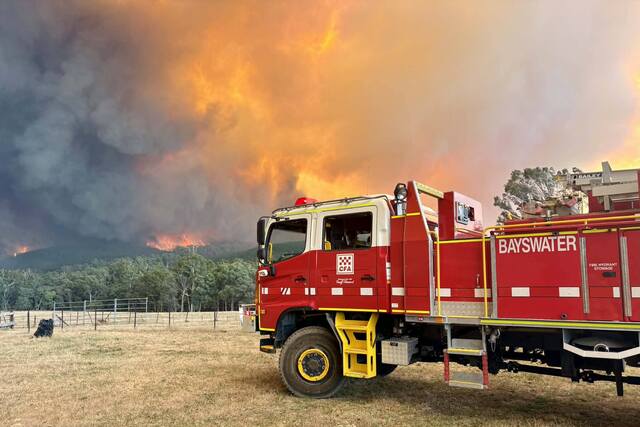
In the face of a potentially severe fire season, CFAs across the Yarra Ranges are encouraging locals to stay informed and download the VicEmergency App.
Captain of the Healesville CFA Brian Earl confirmed that the recent rainfall does not mean the Yarra Ranges are in the clear this fire season.
“We have had a good bit of rain recently, but we’ve had a dry winter and that has left us a fairly dry landscape,” Mr Earl said.
“Whilst this recent rain has definitely made the landscape wet again, it’s still well behind normal trends for moisture, and it will dry out quicker.
“The water will seep away a lot quicker than what it does in wintertime with cooler and darker days. The drier and longer days of summer will mean the recent rainfall will not penetrate as deep.”
Additionally, this season’s wet weather has led to explosive grass growth, elevating the risk of fire in grassland areas.
Mr Earl noted that despite the fact that everything looks lush and green, this moisture “will be short-lived come the other side of Christmas.”
While the AFAC’s latest modelling won’t change how local CFAs prepare for fire season, this year, brigades have begun preparations earlier in the year.
Along with the preparation of CFAs, locals must also do their bit to ready themselves for the fire season.
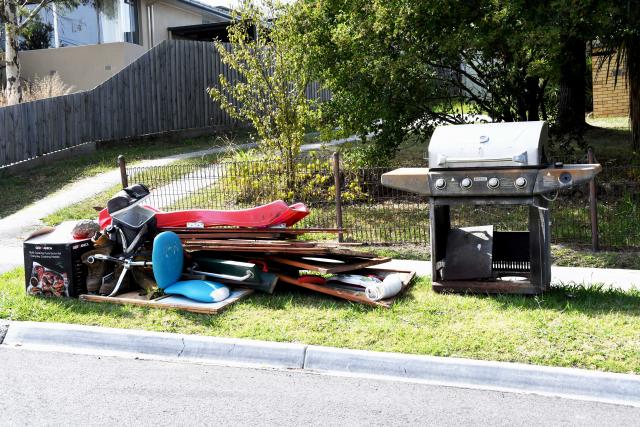
Mr Earl said, “We want people to be as prepared as they can be. That means maintaining their own properties, fence lines, cleaning around houses, and making sure that their driveways are nice and wide to allow fire truck access.”
Ensuring good visibility of one’s property from the street was another of Mr Earl’s suggestions.
“Doing the simple things, such as going out and making sure the house number is still on your letterbox and ensuring that the driveway is still clear enough to allow fire trucks to access your property.”
“You look after your little patch, your neighbour will look after their little patch and hopefully we all have a good quiet season,” Mr Earl said.
Making sure locals have a fire plan is another tip from Mr Earl.
Where Healesville is surrounded by grasslands to the east, and forests to the north and west, the area faces an array of fire risks from both private and public property.
Along with urging the community to be prepared, Mr Earl also said, “I wish everyone a Merry Christmas and a safe and Happy New Year.”