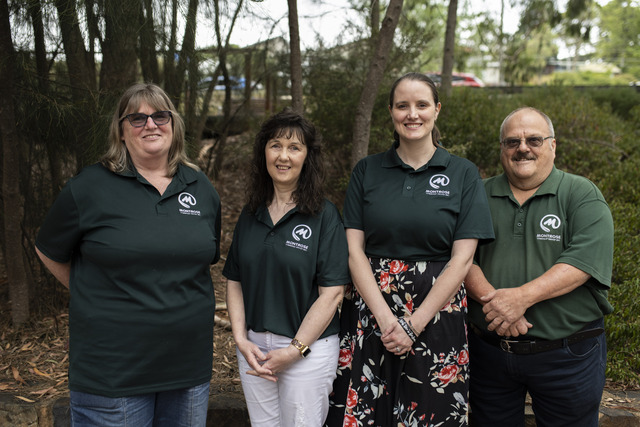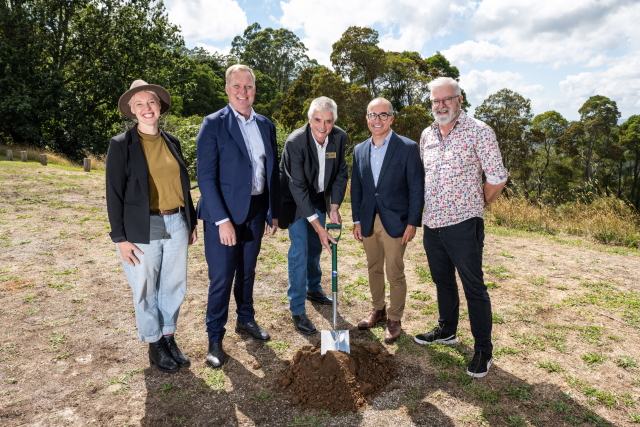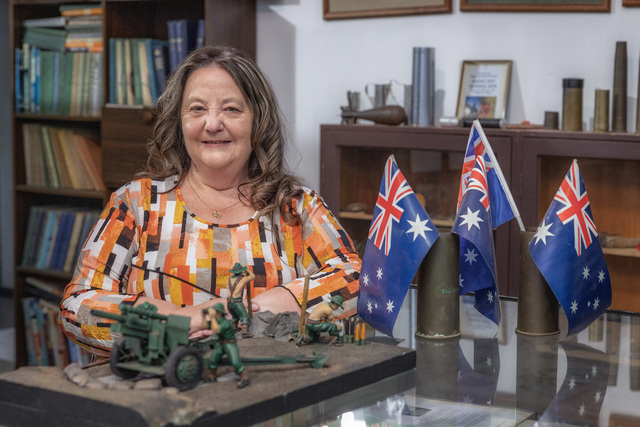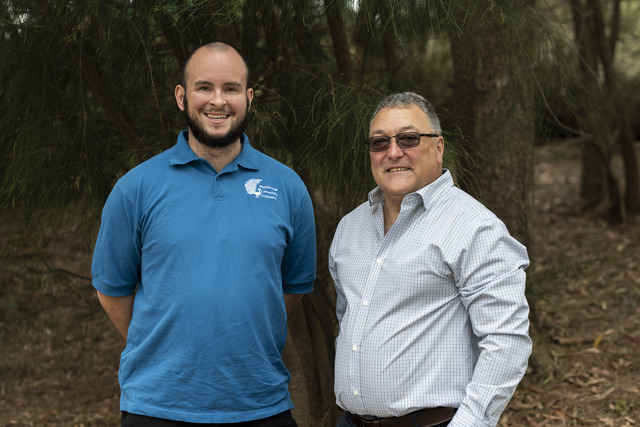
Star Mail was awarded a grant from the Walkley Solutions Journalism Fund to deliver an in-depth journalism project examining how communities across the Yarra Ranges strengthened their resilience to bushfires.
Over five months, the project explored how residents, agencies, Traditional Owners and scientists worked together to address bushfire risk in a region deeply shaped by fire.
The aim was to move beyond disaster-focused reporting and instead highlight practical, evidence-based strategies that strengthened preparedness, supported recovery and built long-term resilience.
To achieve this, Star Mail’s Gabriella Vukman visited sites throughout the Yarra Valley and Dandenong Ranges, documenting initiatives including controlled and cultural burning, habitat regeneration, community action groups, firefighter training and emerging preparedness technologies.
Interviews were conducted with residents, fire service professionals, environmental scientists and Indigenous leaders, alongside analysis of data from fire authorities, environmental agencies and academic research.
The project culminated in a series of in-depth articles and seven videos published on the Star Mail YouTube channel, each exploring different dimensions of bushfire resilience, including land management, township action, social trauma recovery, habitat regeneration, firefighter preparedness and community education.
Preparedness, – a unifying theme
Preparation for an increasingly dangerous bushfire season emerged as a consistent theme across every community, agency and landscape in the Yarra Ranges. With forecasts indicating heightened fire risk, residents, volunteer groups and authorities alike emphasised that readiness was critical to protecting lives, property and the environment.
While each part of the Yarra Ranges faced unique bushfire risks due to differing terrain, vegetation and weather patterns, several universal preparedness measures were consistently reinforced.
Central among these was the importance of having a clear, well-practised bushfire plan.
Community leaders and fire authorities encouraged residents to know their trigger to leave, plan evacuation routes, prepare essential items, make arrangements for pets and livestock, and stay informed through reliable warning systems such as the VicEmergency app.
Pet preparedness was identified as a significant barrier to early evacuation. Community safety advocates worked to address this by encouraging residents to plan dog-friendly destinations, organise carriers for smaller animals and identify safe locations for livestock well before extreme fire danger days.
These practical solutions aimed to remove hesitation and support early evacuation.
Making homes more fire-resilient was another major focus. Measures such as installing gutter guards, clearing fine fuels within 100 metres of buildings, maintaining gardens and protecting vents were repeatedly highlighted as effective ways to reduce ember attack.
In rural and semi-rural areas, broader landscape approaches, including windbreaks, shelter belts and carefully managed grazing, were promoted as complementary tools to reduce fire intensity and protect assets.
Local CFA brigades encouraged residents to attend open days, seek property advice visits and engage with local volunteers to ensure plans reflected suburb-specific risks.
When interviewed, experts also stressed that bushfire behaviour was changing due to climate change, with altered wind patterns, fuel loads and fire frequency requiring communities to continually adapt.
Fire as a land management tool
A central focus of the project was how fire was being reintroduced and managed as a tool for both risk reduction and ecological health.
Cultural burning, led by Traditional Owners, was formally incorporated into Yarra Ranges Council’s planned burning program in 2024.
These low-intensity, “cool burns” aimed to heal Country, restore biodiversity and reduce bushfire risk without damaging soil or ecosystems.
Yarra Ranges Council Indigenous Development Coordinator Garry Detez said, “When Aboriginal people cared for the landscapes, they built in natural bushfire mitigation.”
“It’s been a long journey, probably about nine or 10 years but we are implementing it now,” he said.
Wurundjeri man and Indigenous Development Officer Darren Wandin explained that cultural burning prioritised regeneration rather than fuel reduction alone.
“Fuel reduction isn’t the name of the game,” Mr Wandin said.
“What we’re looking at is reintroducing and revitalising existing species,” he said.
Alongside cultural burns, planned burning remained an essential land management practice.
Conducted under strict conditions and managed collectively by the CFA, Forest Fire Management Victoria (FFMVic) and the Yarra Ranges Council, planned burns reduced fuel loads, moderated fire behaviour and supported biodiversity.
Deputy Chief Fire Officer Tamara Beckett said the program encompassed multiple approaches.
“As part of the Planned Burning Program, we undertake risk reduction burns, ecological burns and cultural burns, so we refer to the whole lot as the planned burning program,” Ms Beckett said.
University of Melbourne bushfire behaviour expert Dr Trent Penman emphasised the need for balance.
“If we leave fire out of many of our ecosystems, we start to lose plant and animal species from those systems,” Dr Penman said.
“It is about finding the right mix of fire, in order to maintain and promote our country’s biodiversity,” he said.
The project also explored emerging practices such as mulching, windbreaks and bushfire moderation zones, which reduced flame height, slowed fire spread and limited ember attack, particularly around built-up areas.
Recovery, Regeneration and Community Leadership
Beyond fire prevention, the reporting highlighted the long-term impacts of bushfire on people and landscapes.
At Dr Ken Leversha Reserve in Montrose, early signs of regeneration were visible months after fire had stripped the area of its canopy.
Community groups focused on supporting natural recovery while monitoring threatened species such as Powerful Owls.
Across the region, township and community action groups played a vital role in strengthening preparedness and recovery.
Township and Community Action Groups in Montrose, Warburton, Millgrove, Healesville, Kalorama–Mount Dandenong, Wesburn and Yarra Junction among others, worked on emergency planning, education, signage, energy resilience and community hubs.
The project also examined social trauma recovery, acknowledging that emotional impacts often emerged long after fires were extinguished.
Shared storytelling, education centres and community spaces were shown to be essential in healing and rebuilding confidence.
Preparing Households and Communities
Residents were encouraged to develop and rehearse bushfire plans, addressing when to leave, where to go, what to take and how to stay informed. Community advocates consistently stressed that leaving early remained the safest option.
Vice President of the Millgrove Residents Action Group Phil Pomeroff said preparedness begins with simplicity.
“bushfire preparedness is having your plan,” Mr Pomeroff said.
“You should leave as early as you can,” he said.
Pet preparedness again emerged as a critical issue. Kalorama CFA Community Safety Coordinator Virginia Porter worked to remove barriers by promoting pet-friendly evacuation options.
“What we found is that a lot of people won’t leave because they can’t take their dogs with them,” Ms Porter said.
“We want people to leave before there is a fire,” she said.
Fuel management near homes was repeatedly highlighted as a priority.
Graeme George from the Healesville Community Emergency Group said, “The critical amount of fuel is the fuel within 100 metres of an asset.”
“Houses are most likely to burn down if there’s fuel within 100 metres of them,” he said.
Environmental scientist Graeme Lorimer reinforced the importance of location-specific advice.
“Each particular location has its own unique aspects and vegetation,” Mr Lorimer said.
“People need to be aware that things are changing almost year by year.”
Innovation and firefighter readiness
The project also showcased innovation in preparedness, including immersive virtual reality training designed to simulate bushfire decision-making under pressure. Participants reported increased awareness of stress responses and evacuation timing.
Community Safety Coordinator at the Kalorama CFA, Virginia Porter was also heavily involved in rolling out the new VR program.
Ms Porter said, “The sessions are also about how one’s ideas, judgement and mindset can change under pressure.”
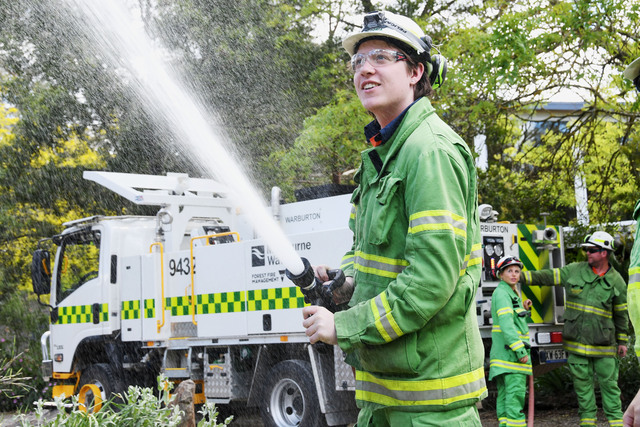
Behind the scenes, firefighter training and readiness formed another critical layer of resilience.
Seasonal training camps in the Yarra Valley prepared hundreds of recruits through intensive hands-on instruction.
“Forest Fire Management Victoria is gearing up for the summer,” said District Manager Dan White.
When it comes to bushfire, regeneration and social recovery, all interviewees noted that these items are a shared responsibility.
“There’s only so much we as public land managers can do,” Deputy Chief Fire Officer Tamara Beckett said
“Residents in bushfire-prone areas need to manage their properties and have a fire plan,” she said.
Across all reporting, a clear conclusion emerged: bushfire resilience in the Yarra Ranges was not built through a single solution. It was created through sustained collaboration between Traditional Owners and councils, agencies and scientists, firefighters and residents, neighbours and communities.
From cultural burning and ecological recovery to township planning, trauma-informed care, new technology and individual preparedness, the solutions highlighted throughout Star Mail’s Walkley-funded project demonstrated that resilience was an ongoing process grounded in shared responsibility, local knowledge and care for both people and Country.